Sunday, December 15, 2013

Seems Legit

      Saying that something has verisimilitude is basically saying that it seems legit. Verisimilitude is a piece's resemblance to reality, the extent to which it appears plausible. Now, trying to find Verisimilitude in a smaller piece, like a poem, is quite hard. There isn't anything that really happens to say seems like the truth. Often, the subject matter of poems are quite abstract and this also takes away from any sense of reality.

 In "The Negro Speaks of Rivers," Hughes claims to have been an active participant in the history, saying things like "I looked upon the Nile and raised the pyramids above it." Through the allusion to the pyramid, the piece fosters a sense of truthfulness and a similarity to reality but I still don't feel that it has verisimilitude. However, in The Things They Carried, O'Brien is able to achieve Verisimilitude. The detail with which he tells the story makes it seem true, especially when he describes the man that O'Brien killed. The details are so horrifying and anatomically correct that it must be true. But with poetry, you don't get a chance to see the detail that really sells a piece.

 So, this week I was watching The Big Bang Theory with my parents and my Dad paused the TV and it landed onto a picture of Sheldon standing next to a board with chemical equations and I noticed something pretty awesome. Written on the board were chemicals that displayed what I believe is Alpha Decay and to my surprise, the equation was correctly written with a superscript to the left of the chemical symbol displaying the atomic mass and a subscript with the atomic number. That small detail added so much to the experience of watching the show and made the show seem like the truth.
 Another great example of Verisimilitude is found in the Lord of the Rings saga and The Hobbit. This weekend, I saw the second hobbit movie and thought that it displayed verisimilitude as well. The Universe is so flushed out and so developed that it seems like another world. In the movie, we can see the effects of actions that happened long ago and how it changed cultures. Thorin, for example, still holds a grudge against the elves for abandoning his people long ago and the people of Lake-Town are still fearful that Smaug may come and destroy their town. Even though The Hobbit is about dwarves and elves and all that junk, it still feels like another reality as the characters act like people. They are just as irrational and helpless as regular people and interact realistically with one another(Except for Legolas who is so good at fighting in the movie that it seems like he is cheating. In one scene he is standing on two barrels in a fast-moving river and firing arrows at the orcs and he doesn't miss a single shot in the entire movie. It's absolutely disgusting but in a good way. ) Verisimilitude is not found in the big ideas that poems consist of but in the little details that make the piece seem real. 

Sunday, December 8, 2013

What is the American Dream?

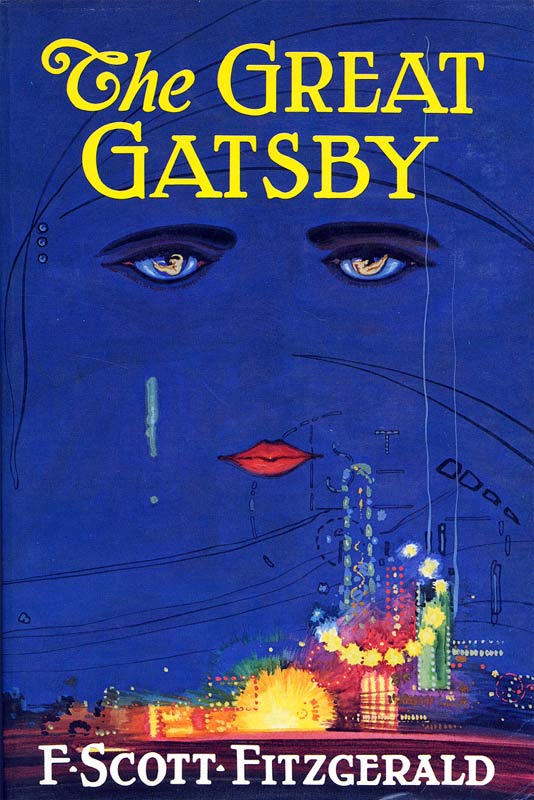
       In The Great Gatsby, Fitzgerald denies the existence of the American Dream, and in a way he is right. The American Dream is not the ideal that we make it out to be but rather, as Fitzgerald points out, an illusion of happiness. Both Gatsby and Dexter focus their American Dream on women, and both come very close to attaining their goal but ultimately fail. In the mean time, they turn their hopes into an unattainable obsession. Fitzgerald describes Gatsby's obsession as  "..But because of the colossal vitality of his illusion. It had gone beyond her, beyond everything. He had thrown himself in it with a creative passion, adding to it all the time, decking it out with every bright feather that drifted his way. No amount of fire or freshness can challenge what a man will store up in his ghostly heart." Gatsby's American Dream has manifested itself in the form of an elaborate and seductive illusion of grandeur. He is so set on his illusion that he is unable to accept that Daisy ever loved another man. Even when it is clear Daisy loves him, thus achieving his goal, his thirst for the American Dream prevents him from being happy. The American Dream has become his representation of a perfect life, and Gatsby needs to acquire it even if it is impossible and this haunts him, blinding him to his own successes.  Dexter is also unable to see his successes as Dexter states that he is bored as he is playing golf with Mr. T.A. Hedrick. However, when Dexter was a child, he used to fantasize about beating him. Dexter's dream has absorbed him so thoroughly that Dexter is unable to truly enjoy life just as Gatsby's obsession with Daisy prevents him from actually enjoying himself as preoccupies himself with this obsession. Dexter also makes his American Dream into an obsession and he actually deludes himself into thinking that he wants Judy Jones as Fitzgerald states  "It did not take him many hours to decide that he had wanted Judy Jones ever since he was a proud desirous little boy." Even though Judy Jones tortures them, Dexter and her other suitors still hang around with the ludicrous hope that Jones will reciprocate and the extent of this is so extreme that Dexter actually thinks that he has wanted her most of his life. For both Gatsby and Dexter, the American Dream is not just an ideal to strive to, but also an impossible dream that haunts their existence.  

Sunday, December 1, 2013

Some people just don't care.


 Sometimes people forget that they are not the center of the universe and don't look at the whole scheme of things and this can have terrible side effects. That is why we have the Hippocratic Oath, " First, Do no harm." But some people don't really care about the rest of the world. In the twenties, people weren't really concerned about the future. They speculated and bought everything on credit to fulfill their need for instant gratification but didn't care about the economy as a whole. They played with the economy like it was a jenga tower but didn't care that the blocks were falling down. Similarly, Daisy and Tom threw Gatsby under the bus when they blamed him for Myrtle's Death. Tom already knew that Wilson had lost it but didn't care who Wilson hurt as long as it wasn't him. Daisy and Tom represent the careless attitude of the twenties. Fitzgerald states that they "smashed up things and creatures and then retreated back. "

In Econ. , a few weeks ago, we discussed the Tragedy of the Commons where the public sheep grazing area was overgrazed as people didn't care about the land. However, when the govt sold individual plots of land, people took care of it. The whole concept of externalities is based on the fact that people can have an impact on things that they don't have anything to do with. In the more global world this has to be taken into account and people should try to help have a positive impact instead of ignoring the world.
in the dark knight, Alfred has a really awesome line when he tells Batman "Some people just want to watch the world burn." I believe he is commenting on how some people just don't care what happens to the world as long as their needs are met and may actually take pleasure in the destruction. That is definitely the case with Tom and Daisy as in their mind, the world is their oyster and theirs alone to use up in any way they would like.


Sunday, November 24, 2013

Impartial Observation

     In The Great Gatsby, Nick Carraway remembers and follows his dad's advice: " Whenever you feel like criticizing any one, just remember that all the people in this world haven't had the advantages you've had"  (Fitzgerald 1).  This is similar to David Foster Wallace's advice in his speech "This is Water," and as a result, Nick is able to escape his "default setting" and not just view the world in terms of himself. Nick reserves his judgement and simply tells it like it is, which is awesome. It allows me to form my opinions and the book is so descriptive that it almost feels like a primary source.  For example, Fitzgerald uses Gatsby's party  to show first hand the excessively glamorous lifestyle of the 1920s as he describes the full orchestra, buffet tables full of spiced baked ham, and more alcohol than they all need. It speaks to the excess of the era like an advertisement for a car curtain with silk pull tassels(Absolutely disgusting by the way. Ruining a beautiful car with overpriced and ugly curtains.). In history, the 1920s are often overlooked because it is sandwiched between World War I and The Great Depression but works like The Great Gatsby help to preserve the era.


Sunday, November 17, 2013

The Value of Punctuation Today.


        Due to the evolving world's increasingly minimalist perspective, it is only natural that punctuation also becomes less important and adjusts to differing norms.


        Punctuation is not essential to communication. When people text, they compress complex sentences into three letters, so how does a period really help? Austen's poem, "On Punctuation," displays clarity without using punctuation by forgoing punctuation yet remaining easy to understand (Source B). In the modern world, conciseness is valued above all else. If people are to reduce the number of words they use, why not reduce the number of punctuation marks? People use punctuation marks too much and often incorrectly anyways, creating errors such as the comma splice. Twitter's 140 character limit forces users "to be concise and less flowery with language," and this limit applies not only to words but to punctuation marks as well. (Source F). If one's writing is clear and concise, then additional punctuation doesn't have a purpose. On the other hand, some people argue that the rules for punctuation form a long established tradition and changing it would be detrimental to communication. The truth is that there is no such tradition as punctuation is always changing. In his article on the evolving rules of communication, Hitchings states that punctuation marks "such as the pilcrow and the hedera enjoyed temporary places in common usage before fading from view," proving that punctuation comes and goes while English continues to thrive. (Source A). 


           The rules of Punctuation should be considered a form of government, and when these rules do not serve a purpose, "it is the Right of the People to alter or to abolish it, and to institute new Government."
  

Sunday, November 10, 2013

Why So Serious?

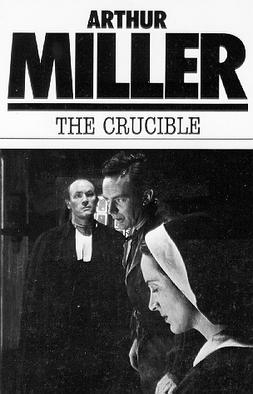
     Reverend Dimmesdale, even though his secret was literally killing him, waited seven years to reveal his secret. John Proctor waited until his wife's life was in danger to reveal his secret, even though it could have saved him. Both Proctor and Dimmesdale committed the sin of adultery and could have saved themselves a lot of hardship by confessing. So why didn't they confess?

I believe that it is because of the Puritan Community and its serious demeanor. After they pretty much outlawed fun, the Puritans didn't have anything where they could blow off steam. When there is no break, no relaxation; people become so focused and absorbed in minute details. When people are calm, they take things in stride and move on with their lives. However, when people are stressed and something bad happens, they become obsessed with those that have wronged them and go out for vengeance, like Chillingworth.  In both the Crucible and the Scarlet Letter, the townspeople loved to gossip. They could only focus on the bad aspects of people and ignored the good. They judged people based on the crime and ignored any other circumstances.

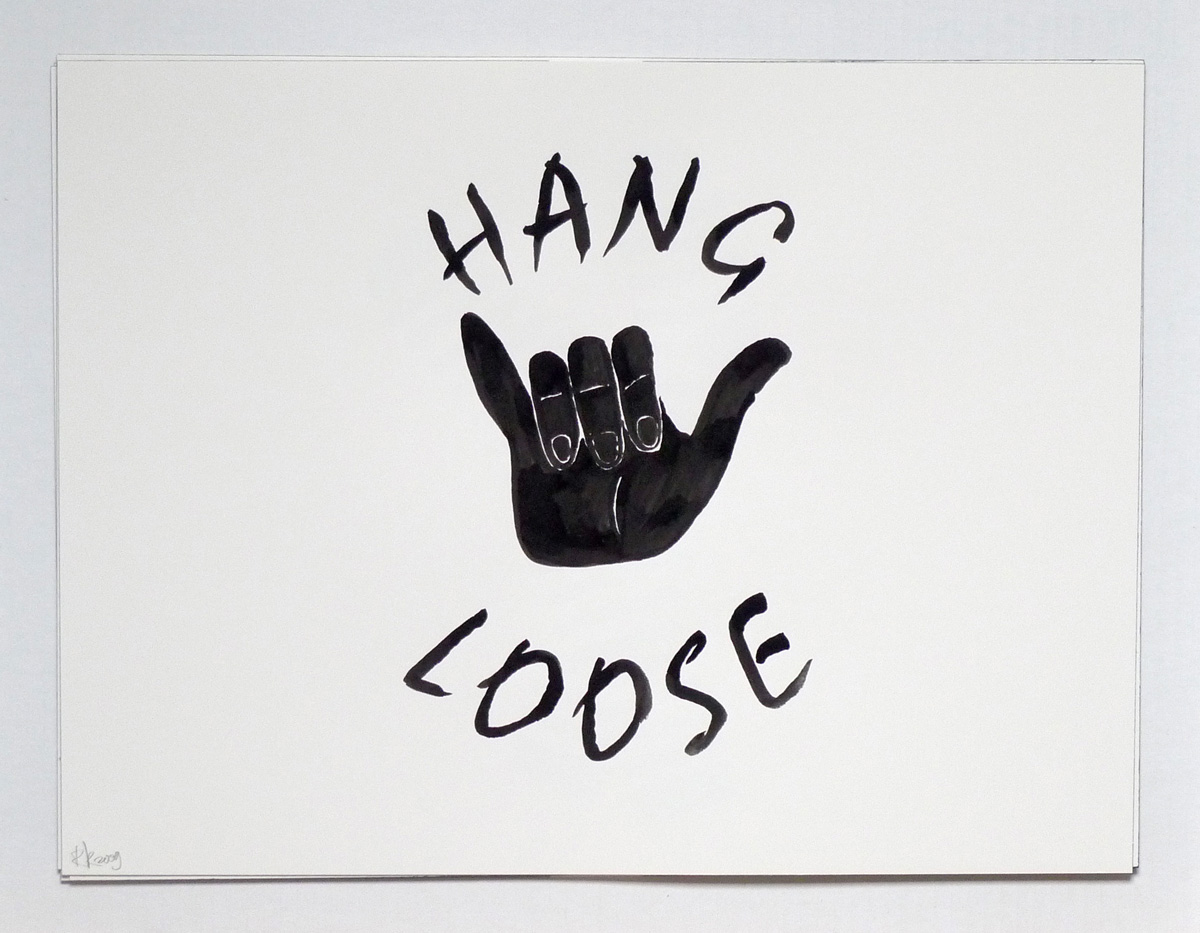
A couple of years ago, I went on a trip to Hawaii and really loved the people there. Everyone was really calm and no one got angry over small things. In every single shop, there were T-Shirts that read "Hang Loose," and the culture there really reflects that.

I feel that High School is kind of like the Puritan Community. There is so much pressure on the kids that they tend to make a big deal out of everything.

Sometimes people should just stop for a moment, take a deep breath, and ask themselves, "Why So Serious?
"

Sunday, November 3, 2013

Literary Overload or Not?

        In The Scarlet Letter (I finally realized there was only one t.), Hawthorne uses a plethora of symbols, metaphors and figurative language to describe his characters and the Puritan community   Every detail in The Scarlet Letter is important. Literally every detail. It's absurd. Pearl's name symbolizes how she comes at a great cost to Hester just as a pearl comes at a great cost to oyster and also symbolizes how much Hester values Pearl and a bunch of other things. The "A" symbolizes something different every chapter. It is almost overwhelming.  I remember when Ms. Valentino handed out the first chapter for us to annotate and it took a half hour. The first chapter is only 32 lines but I could write an eight page essay on the symbolism of the Prison-Door. Seeing our intense annotation of the first chapter was actually intimidating. Before reading any further, I had to say "It can't be worse than Emma," and thankfully it wasn't. I was pleasantly surprised as I found that The Scarlet Letter to be really interesting.  The story feels really deliberate and the figurative language wasn't suffocating.  I used to think that in some books, some of the figurative language and symbolism happened by accident, but in The Scarlet Letter, I actually thought that Hawthorne thought of all the figurative language and intended for it to be interpreted in the way it is. That is due to the fact that everything connects together so well that nothing feels out of place. Also, if Hawthorne uses figurative language, it is for something important.  The Scarlet Letter is so widely acclaimed not because of its abundance of symbolism and figurative language but how it uses figurative language. I have a new found respect for Nathaniel Hawthorne as he doesn't waste words.  As Mark Van Doren said, "The Scarlet Letter, like any masterpiece, is powerful everywhere and all the time. If its scene is bleak, itself is blended of the richest, most moving, most splendid things, put densely and inseparably together." 

Sunday, October 27, 2013

Life in Color

            This week, Ms. Valentino showed us an awesome piece of poetry(Check it out, I posted it on the left). The poem was about how through the use of technology we lose the ability to connect with one another and I totally agree. There is something special about communicating with people face to face. You really get to connect with people as you can see them for what they really are and not just what you want them to see.

 What I mean is that when people post online, they only tell you what they want you to hear. They will post about their A in Calculus but won't mention their C in Chemistry. They are always aware of their digital footprint as they watch what they say as colleges, employers and the rest of the world is watching. As a result, they don't say what they truly mean and don't let their personality shine. My friends often use swear words for emphasis and they kind of allow me to see how frustrated or angry they are, but online, their english is impeccable and it sounds like their mothers washed the swear words out of their mouths with soap. They are almost completely different people online then the friends that I have come to love.

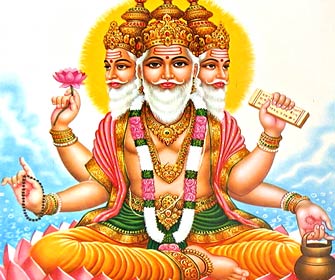
However, most importantly, there is also an emotional connection that you miss out on online. I believe that people can only truly connect in person. When talking, the way you convey your message is almost as important as your message itself. In person, I can hear the change in your tone, see you get excited and animated and am able to see things from your point of view. This is the reason why Presidential debates or any other debates are conducted in person and not over Skype. As humans, we pick up on things such as body language and tone and these are best observed in person. It is quite hard to explain but you just feel connected to people when you are in the same room.  This week, a former Troy High Grad was in a car accident and is still in critical condition, and so after the football game, there was a candlelight vigil to pray for her. In that silence, everybody there just connected. It didn't matter that I was a Hindu and most of the people were Christian. Everybody there felt the same thing and just prayed.
Another example of this is in music. I find that in the acoustic version of songs you can truly feel what the artist is feeling. So below I included two video clips of OneRepublic's Song "Life in Color," which truly fits the theme of this blog. One is the acoustic clip taken in London and the other is taken of their album. If you listen to them, you can really feel the emotion in the acoustic clip and it sounds totally different from the studio produced version.

I hope that less emphasis is put on social networking and people realize how much better it is to interact with people in person. I don't want to be your facebook friend; I want to be your friend where it truly matters: in the real world.

Sunday, October 20, 2013

It's Give and Take

       Freedom is at the heart of our civilization. It is the ideal that our country has strived for. When looking at the Declaration of Independence and the Declaration of Sentiments, we can see that both Jefferson and Stanton were truly oppressed. However, sometimes I find that people kinda go overboard with the whole freedom sentiment and start attacking others for taking away their "freedoms." It's easy to become very passionate after reading such a powerful document but sometimes it goes too far. People often feel that their rights are being violated for very trivial things and I don't get it. They view themselves as the victim when it really doesn't harm them in anyway and in fact may be beneficial. For example, Some people protest against the screening policies of the TSA but the TSA protects us. My mom is "randomly" screened almost every time but it is for the Common Good and to protect the United States. I find it annoying that I must be checked at security checkpoints( although their scanners are pretty cool), but I don't view it as the government violating my rights as they are just trying to protect us. Sometimes, somethings are more important than an individual's freedom. The U.S. Government has our best interests in mind and sometimes we have to give things up in order to reap the rewards.

Sunday, October 13, 2013

Bad Reputation= Bad Life

          In "The Crucible," most of the characters are concerned about their reputation. From Reverend Parris's trying to dissociate himself from Abigail to John Proctor's struggling to keep his "name," the motif of reputation and an individual's name. With the invention of the internet, everything becomes permanent and public. A Google search can tell you all you need to know. Nowadays, you can't just pull an Abigail and leave town as your reputation will follow you. Another reason why Reputation is so important is because everything is now connected. Its like one of those DirectTV commercials where one thing can cause a series of things that can cause another totally different thing to happen. Your Reputation is not just part of your social life. It can cause you to lose a lot of money and lose out on many opportunities. If you have a bad reputation with your credit card company, you will have a low credit score and won't be able to get loans or will be charged more. If you have a bad legal reputation, you won't be able to get some jobs. and the list goes on and on. Don't lose out on jobs, and Don't pay more for everything. Get rid of your bad Reputation.

Sunday, October 6, 2013

Are Some Punishments too final?

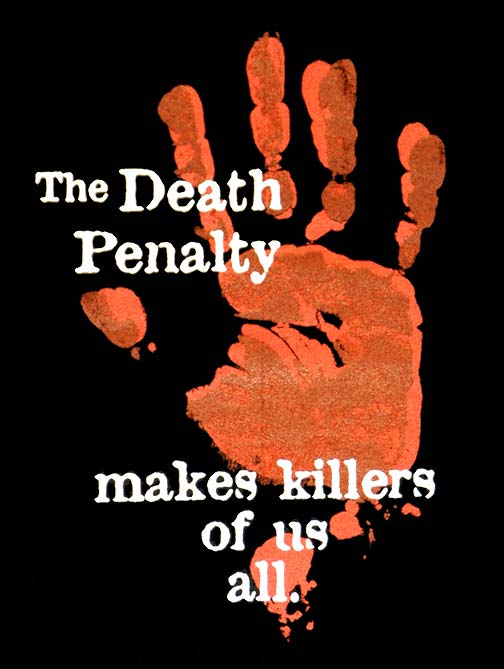
             In "The Crucible" by Arthur Miller, Governor Danforth calls witchcraft an "invisible crime," in which Salem must rely on witnesses to present the evidence. However, this literally places the accused's life in the hands of the witness, who we can guess is not too fond of the accused. I don't understand how we can place the life of a human being in the hands of other humans who can be so cruel and mean. Fore example, Abigail blames Tituba and calls her witch without hesitation in order to save her own skin while Putnam causes Rebecca Nurse to be hanged simply for more land. The Death Penalty is final. If you lock someone in jail, you can set them free but you can't bring the dead back to life. I understand that now we have supposedly impartial juries but how are we to know that they are making the right decision? In Controversial cases like the Casey Anthony trial and the trial of George Zimmerman, we are still not in agreement as to what the correct decision was. Before someone is condemned to die, we must be sure that are completely guilty, but we can never be sure. How terrible would it be to die like John Proctor, a man who was seen as totally guilty yet was completely innocent.  The Death Penalty is too much power for humans to wield. We are not gods to say who lives or dies.

Sunday, September 29, 2013

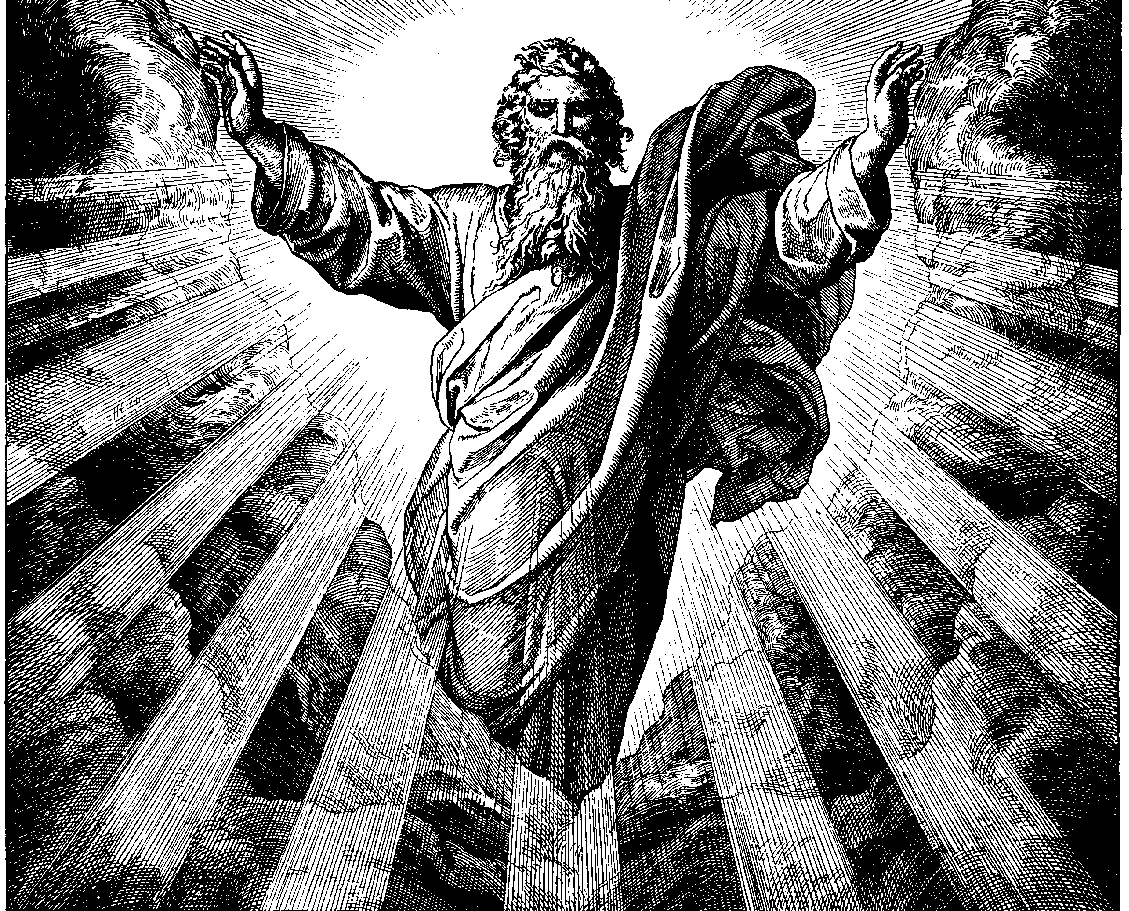
Dear Mr. Edwards, Is God that angry?

      In "Sinners in the Hands of an Angry God," Edwards paints a picture of a cruel and ruthless god. But what is god really like? I don't know. No one really knows but we all have our established beliefs. Some believe that God is peaceful and kind while others, like Edwards, believe that God is harsh and angry.
        To begin with, we don't really know if god exists and how involved he is. Some believe that God does exist while atheists don't. On another hand, Deists believe that God created the world but is no longer involved.
        Looking past this first conflict opens up another conflict. God has divided people all throughout human history causing conflicts from the Crusades to the conflict of modern day terrorists and extremists. This is due to our different interpretations of God. Most of us can agree on the fact that God is omniscient, and all powerful but we try to describe God through personification when that doesn't quite fit. We can't really describe God and a theory that expresses this viewpoint is the Apophatic theology or Negative theology. This theory basically expresses that we can only describe what god is not. For example going back to the question of God's existence, we can't proof whether or not god exists so we can only say that God is not non-existent.
        Religions are not endorsed by God and so we can't really assert whether one is more right than another. People often use God to support their own agenda like Edwards using an Angry God to frighten people into being religious, but really cannot prove if their interpretation is any good.  


Sunday, September 22, 2013

Perspective

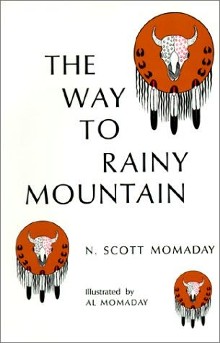
        Sherman Alexie and N. Scott Momaday provided me with a new perspective on American Literature. When I think of American Literature, I think of Huckleberry Finn and Tom Sawyer, but not of the true Americans. What makes Alexie and Momaday's work unique is that they are a modern take on the culture of Native Americans. Most of the stories written about Native Americans take place during the early 1800s when Native American tribes were scattered to accommodate the colonists belief of manifest destiny but after that time not much has been written about Native Americans.
         In Momaday's story, we can the end of the Kiowa and see that period of history from a more modern point of view.  More than other cultures, the Native American culture has really aged. No longer is man satisfied with living with nature and wants to control it which makes it difficult for Native Americans to live as their ancestors did. Momaday's story illustrates this period of time where the rest of the world forced the native americans to change and his grandmother emphasizes their reluctance to let go of their heritage.
            I really enjoyed Alexie's stories. Not only because of their wit but because I could relate to it. Alexie is torn between his Native American Culture and the American way just as I kind of fit in to the American Culture and the Indian Culture. It is interesting to see Native Americans in that kind of light and Alexie made it so that I could relate to them. Sherman Alexie also makes it really funny to read and is able to provide both an insider and outsider perspective on the modern state of Native Americans. Americans see Sherman Alexie as Native American while Native Americans see him as more Native American and Alexie uses this to his advantage. He is able to comment on the stereotype of Native Americans as alcoholics(which he shows is kind of true.) but is also able to make fun of those that discriminate against the Native Americans such as the 7-11 clerk.
          These stories provide interesting views on Native Americans as Momaday and the stories of his grandmother provide the viewpoint of a Native American looking out on the world and Alexie conveys the tone of a Native American torn between cultures which allows me to see the situation in a new way rather than that of an outsider looking in.

Sunday, September 15, 2013

Is it in my power or is it not? That is the Question.

       Teachers always tell students that they can do anything. Whether it be my second grade teacher reading "The Little Engine that Could" to the class or my Spanish teacher hanging a poster of Rosie the Riveter, teachers always try to encourage students. However, I don't believe they are telling the full story. I believe that individuals wield enough power to change the world but need some form of support.

        In The Adventures of Huckleberry Finn, Jim is able to earn his freedom with some help from Huck. Without Huck's warning, Jim would have been captured on Jackson's Island by Mr. Loftus and Company. Without Huck's help, Jim would never have been able to evade the robbers. Without Huck, Jim would never have escaped from the Phelps's home. Jim had the power to earn his freedom, but without the support of Huck, he wouldn't have been able to overcome the obstacles in his way. And vice versa, Huck wouldn't have been able to avoid being sent back to his father without Jim's help.

       This weekend, I had the pleasure of seeing a modern adaptation of The Merchant of Venice at the Stratford Festival. There is a lot of Anti-Semitism in the play and this is further emphasized by the fact that it takes place during the Holocaust. This got me thinking about how Hitler has changed the world and the support he received. Hitler was only able to carry out his plan with the help of others. Similar to how the Venetians hated Shylock, a Jew, in The Merchant of Venice; People hated Jews with a passion during this time and with their support, Hitler was able to commit his heinous crimes. If Hitler had not received any support, he would not have been able to carry out his plan and six million Jews would have been saved.

      Individuals have a lot of power but are still dependent on our support. We have to think about this when we make our decisions. When we support anyone, whether it be a government official or a CEO, what are we enabling them to do?